
November 2025: Land Stewardship and Our Letter to the Premier
Dear WTA Community,
Across British Columbia, land-use conversations are unfolding with more urgency and complexity than ever. From the North to the Kootenays, and the Cariboo to the Coast, communities, First Nations, operators, and residents are being asked to help shape decisions that will define the future of our forests, watersheds, wildlife, businesses, and recreation opportunities for generations.
As Executive Director of the WTA and policy lead for TIABC, I see how these issues cross every ministry and every sector. They require the kind of collaborative, solutions-oriented approach that WTA brings to the table, grounded in lived experience on the land and supported by decades of advocacy. Through our partnerships like the Fish, Wildlife & Habitat Coalition, we’re demonstrating what it looks like when conservation, community values, and sustainable business work together to protect what matters.
But land-use planning isn’t just policy work. It’s deeply personal.
Growing up, the day after American Thanksgiving meant heading into the woods with my family to find a Christmas tree, not shopping, but reconnecting with nature. The crunch of snow, the smell of pine, the debates over which tree was “the one”. These moments taught me that nature is memory, grounding, and belonging.
I feel that same connection today in places like Wells Gray, the Bowron Lake Canoe Circuit, the Monashees, Silver Star Provincial Park, the Great Bear Rainforest, and the Stein Valley- places defined by beauty, stewardship, and the responsibility we all share to protect them.
These landscapes are BC’s sanctuaries. They sustain our wellbeing and anchor our identity. And yes, they are fundamental to wilderness tourism, guide outfitters, paddling companies, lodges, and adventure operators. But their value is far greater than economics.
As BC moves through several land-use planning processes, from Kaska to Gitanyow, from the Skeena to the Okanagan, we have a responsibility to show up and speak up. The decisions ahead will determine whether future generations can still hear wolves at dusk, paddle quiet lakes, carve fresh powder, or find their own Christmas tree deep in the woods.
This is where the WTA’s advocacy truly matters. We bring the voice of operators, guides, remote communities, and wilderness stewards directly into the room. We help bridge conversations between government, First Nations, and industry. And we underscore why protection, access, and sustainable decision-making must remain at the heart of BC’s land-use future. Together, we can ensure BC’s irreplaceable wild spaces remain protected, accessible, and thriving for generations to come.
Cassandra Zerebeski
Executive Director
To the Premier: Prioritizing Outdoor Recreation and Parks as a Pillar of Look West
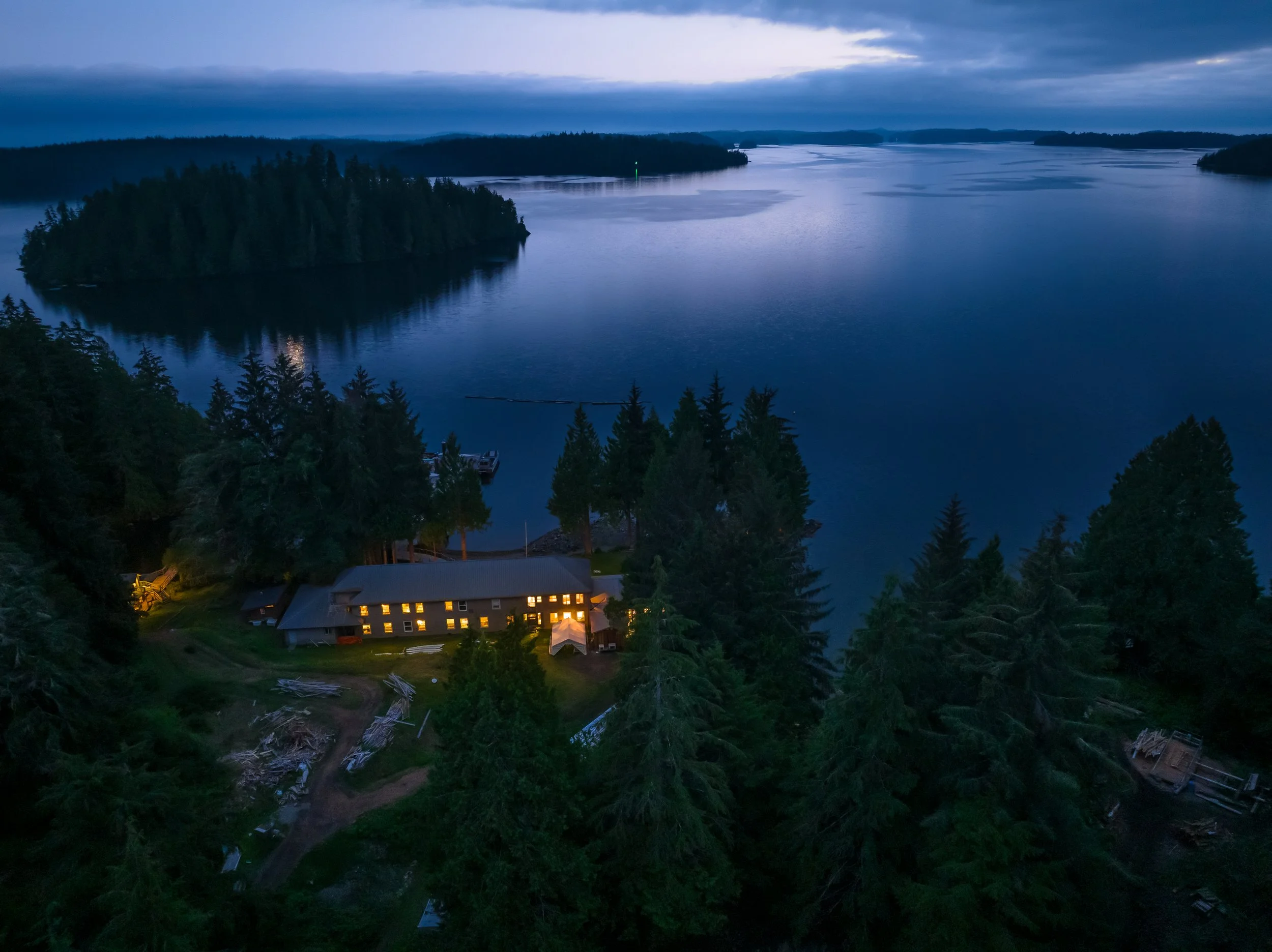
Broken Islands Lodge
This November, the WTA, along with several partners in the recreation and tourism industry, sent a letter to Premier David Eby emphasizing the potential we have to make BC a world leader in outdoor recreation and parks. We identified what our organizations need to make this a reality, and ways we can work with the Province to strengthen our sectors.
Finally, we identified six priorities that will help in reinforcing BC's recreation and parks sectors, creating jobs and innovation, increasing revenue, and benefit BC's global brand.
The letter stressed the importance of recreation and parks, including wilderness tourism, being featured in the Province's new Look West Jobs and Prosperity Strategy, announced on November 17. We're very happy to see tourism is included as a targeted industry.
Tahltan-BC Land Stewardship Planning Discussions
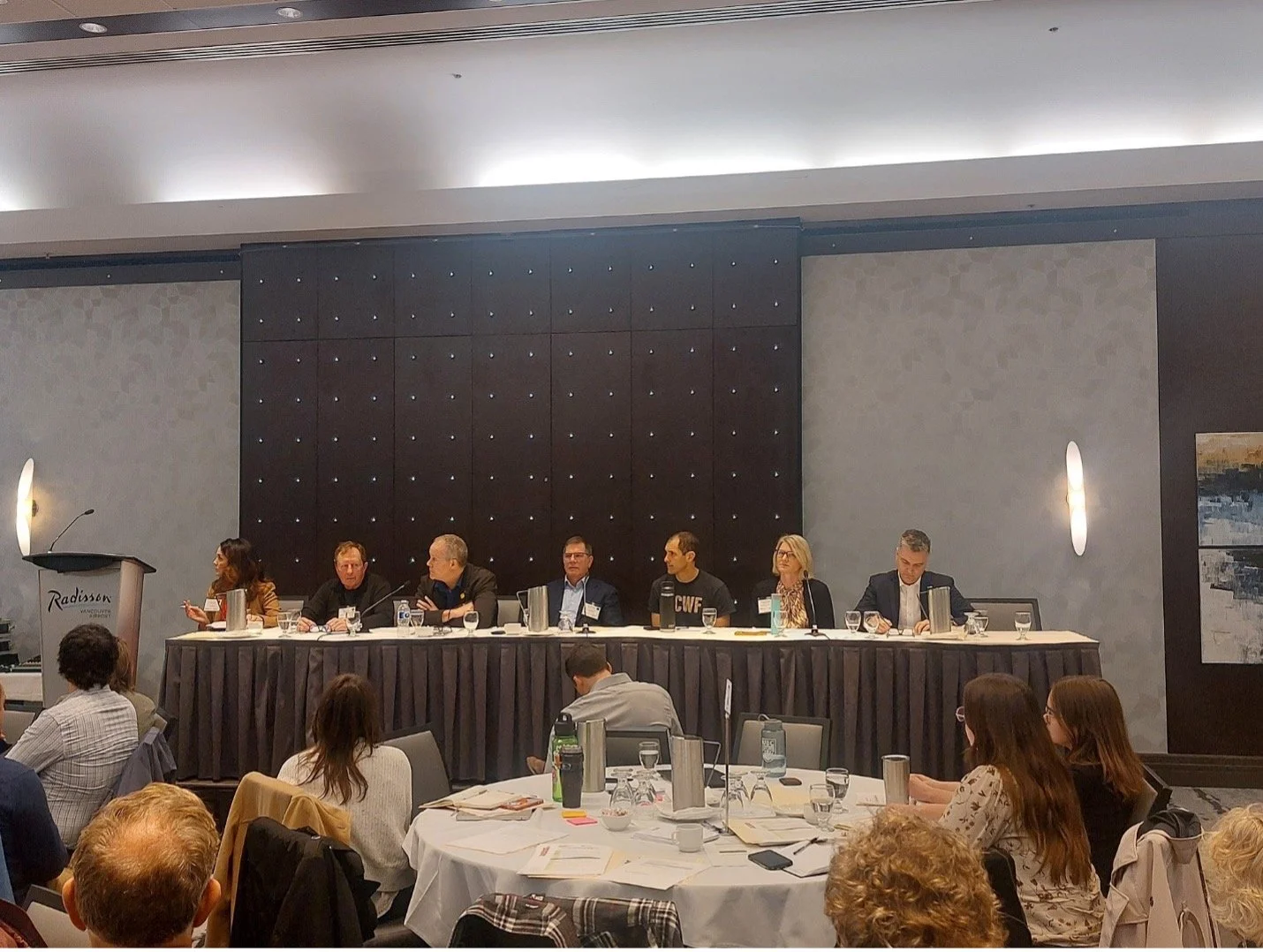
WTA Executive Director Cassandra Zerebeski participates in the Tahltan-BC Land Stewardship Planning Discussions
The WTA participated in Tahltan–BC Land Stewardship Planning discussions this month in partnership with the Tourism Industry Association of BC (TIABC). We emphasized the importance of predictable access, long-term certainty, and equal consideration of tourism within multi-sector land-use frameworks. Panelists included Cassandra Zerebeski as TIABC Policy Director and WTA Executive Director, Scott Ellis with Guide Outfitters and BC Wildlife, the Canadian Parks & Wilderness Society, and members of the mining industry. Northern BC Tourism and Outdoor Recreation Council of BC also took part in the meaningful dialogue.
We also presented at the Tlatsini (Taku–BC) project. For more information please visit TRT-B.C. Tlatsini Planning Project - Project Details - Planning in Partnership. Operators and tourism partners are invited to provide interest statements this month to the Ministry of Water, Land, and Resource Stewardship to participate and ensure their values are reflected.
Fish, Wildlife and Habitat Coalition
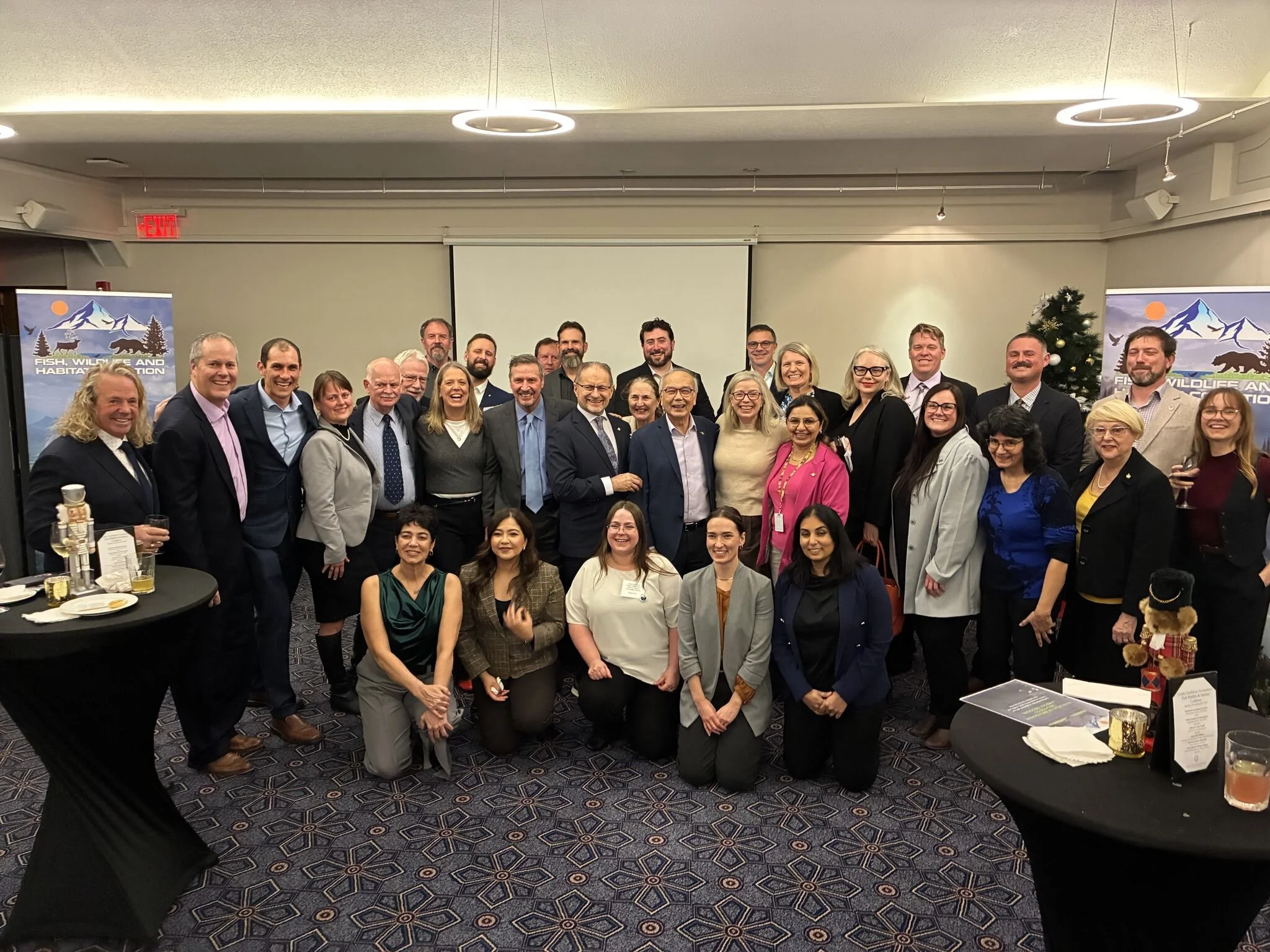
Members of the Fish, Wlldlife, and Habitat Coalition meet with MLAs
In late November in Victoria, the Fish, Wildlife & Habitat Coalition (FWHC) brought together leaders from across government to advance our shared priority: ensuring British Columbia’s fish, wildlife, and natural habitats are healthy, resilient, and protected for generations.
Across ministries and caucus rooms, one message resonated clearly: fish, wildlife, and habitat are not just environmental priorities, they are the heart of British Columbians. They shape our communities, quality of life, recreation and tourism economies, and the deep connection people hold to BC's land and waters.
FWHC is the largest and most diverse conservation and sustainable business voice in the province. As members ourselves, we are on the ground in every corner of BC and at the table in every major land-use conversation effort- bringing practical expertise, lived experience, and a shared desire for solutions that work for communities, ecosystems, and economies.
Attention Members: November's WTA Insight Session

Missed our first Insight Session 'Tackling Insurance Pressures Together?' Not a problem! The recording is now available on our YouTube page. The session brought together operators, insurers, and industry experts to talk about rising costs, risk management, and more, with practical steps for operators to feel resilient and protected.
If you have topics of interest or ideas for future sessions, please don’t hesitate to let us know via email at ed@wilderness-tourism.bc.ca.